Introduction
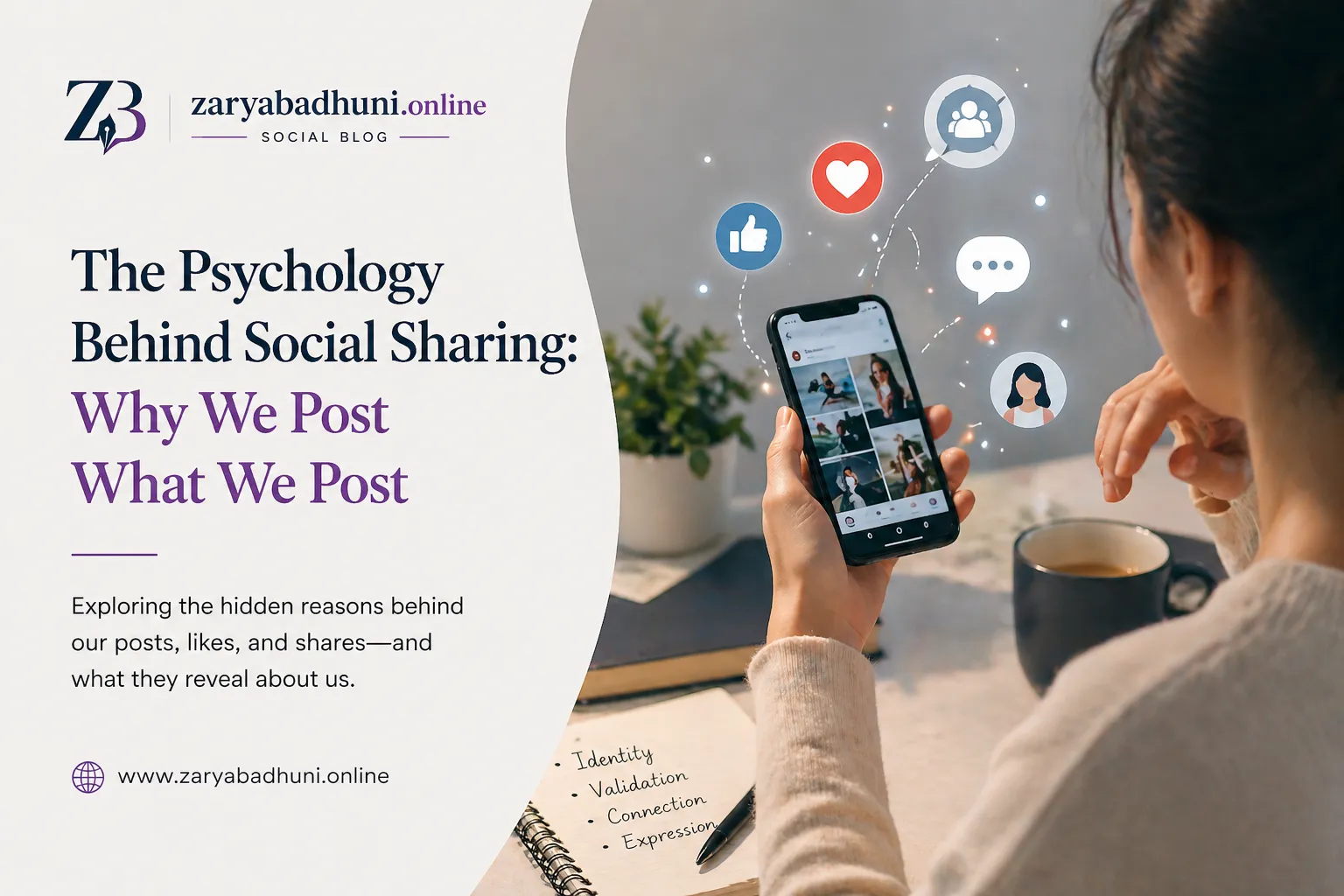
Every day, millions of people share photos, opinions, achievements, and even personal struggles on social media. But have you ever stopped to ask: why do we feel the need to share so much?
Social sharing is not random—it is deeply rooted in human psychology. From seeking validation to building identity, the content we post often reflects more about our inner world than we realize.
The Human Need for Expression
At its core, social media taps into a basic human desire: the need to be seen and heard.
People share content to:
- Express thoughts and emotions
- Document life experiences
- Communicate their identity to others
In a digital environment, posting becomes a modern form of storytelling.
The Role of Validation
One of the strongest psychological drivers behind social sharing is validation.
Likes, comments, and shares act as digital approval signals. When people receive positive feedback, it triggers a sense of reward and satisfaction.
This can lead to:
- Increased confidence
- A desire to post more frequently
- Dependence on external approval
However, over-reliance on validation can create emotional ups and downs based on online reactions.
Identity and Personal Branding
Social media allows individuals to carefully curate how they are perceived.
Whether consciously or unconsciously, users build a digital identity by sharing specific types of content:
- Lifestyle posts
- Opinions and beliefs
- Achievements and milestones
This creates a personal brand—one that may or may not fully reflect reality.
The Fear of Missing Out (FOMO)
FOMO is another major factor influencing social sharing. When people see others posting about exciting events or achievements, they feel pressure to stay relevant and visible.
This results in:
- Posting more frequently
- Highlighting only the best moments
- Comparing one’s life to others
Over time, this cycle can lead to stress and dissatisfaction.
The Power of Relatability
Content that feels relatable often performs better because it creates emotional connections.
People are more likely to share posts that:
- Reflect common struggles
- Evoke humor or nostalgia
- Align with shared values
This is why memes, personal stories, and real-life experiences spread so quickly.
Finding Authenticity in Sharing
While social media encourages sharing, authenticity is often lost in the process. The pressure to present a “perfect life” can lead to unrealistic portrayals.
To maintain authenticity:
- Share meaningful content rather than constant updates
- Avoid comparing your life to curated feeds
- Focus on genuine interactions over numbers
Conclusion
Social sharing is more than just a habit—it’s a reflection of human psychology. It reveals our need for connection, recognition, and self-expression.
Understanding why we share can help us use social media more consciously. Instead of chasing validation, we can focus on creating content that is authentic, meaningful, and true to who we are.